How to Search Algorithms Shift Your Rankings?

The digital search landscape is presently experiencing the greatest turmoil considering that the intro of Google itself. What recently appeared like science fiction is reality today: AI systems respond to complicated concerns in seconds, Google changes its search results page through AI Overviews, and unexpectedly we need to ask ourselves how much longer there will be 10 blue links.
According to a SparkToro-survey, Google processes 14 billion search questions daily, while ChatGPT just reaches 37.5 milliona ratio of 373:1 in Google's favor. Nonetheless, a clear pattern is emerging: The main factor depends on the efficiency of these systems. AI searches deliver direct, manufactured responses rather of a list of links.
And in a discussion. Users can ask concerns in natural language and receive contextual answers Rather of having to browse multiple sites, users right away get manufactured information Lots of AI systems can at the same time compose text, create code, and examine information For SEO professionals, this pattern suggests: You should not just enhance for Google's 10 blue links but also understand how your material is translated and cited by AI systems.
Static Versus Modern Ranking Frameworks
McKinsey's numbers plainly show that diversifying your search strategy beyond Google is ending up being essential: Google AI Overviews basically alter search result pages. These AI-generated summaries appear in about 4.5-12.5% (depending upon the research study) of all search questions and summarize info from numerous sources. They're especially common in educational search questions.

Studies reveal a decrease in natural click-through rate when an AI Summary is shown., the average click-through rate on position 1 is 34.5% lower due to an AI Introduction., organic CTR in this case even drops from 1.41% to 0.64% year-over-year.
Surprisingly, according to Seer Interactive, AI Overviews appear particularly regularly in search queries that currently had a high rate of previously. In information-driven industries like health, AI Overviews are displayed in up to 82.5% of search queries according to SE Ranking, while in commercial locations such as e-commerce and retail, it's only about 2%.
Mastering a Elite Digital Blueprint for 2026
This development makes it necessary for business in the DACH region to adjust their material technique to generative search systems. Desire to discover more about the effect of Google AI Overviews on SEO and SEA? Want to learn what the future of search looks like?
, search questions in AI Mode are on typical 2-3 times longer than standard Google searches. Particularly revolutionary are the agentic functions of AI Mode.
Web 2.0 postAI Mode also provides extensive personalization choices. With user approval, it can access individual information from the Google account to provide tailored responses. For example, it can consider visits from the calendar or acknowledge travel plans from Gmail confirmations. sometimes also called Response Engine Optimization (AEO), Large Language Model Optimization (LLMO) or Generative Artificial Intelligenze Optimization (GAIO) is establishing into the new standard in seo.
Static Vs. Future Ranking Models
Conventional SEO optimization is no longer adequate to remain noticeable in an AI-dominated search landscape. Optimization for AI systems requires reassessing content production.
Material categorized by AI systems as trustworthy and informative has better chances of being plainly positioned in search results page and AI answers. In this video, we dive into concrete strategies for appearing in AI search along the client journey: You are presently seeing a placeholder material from. To access the real material, click the button below.

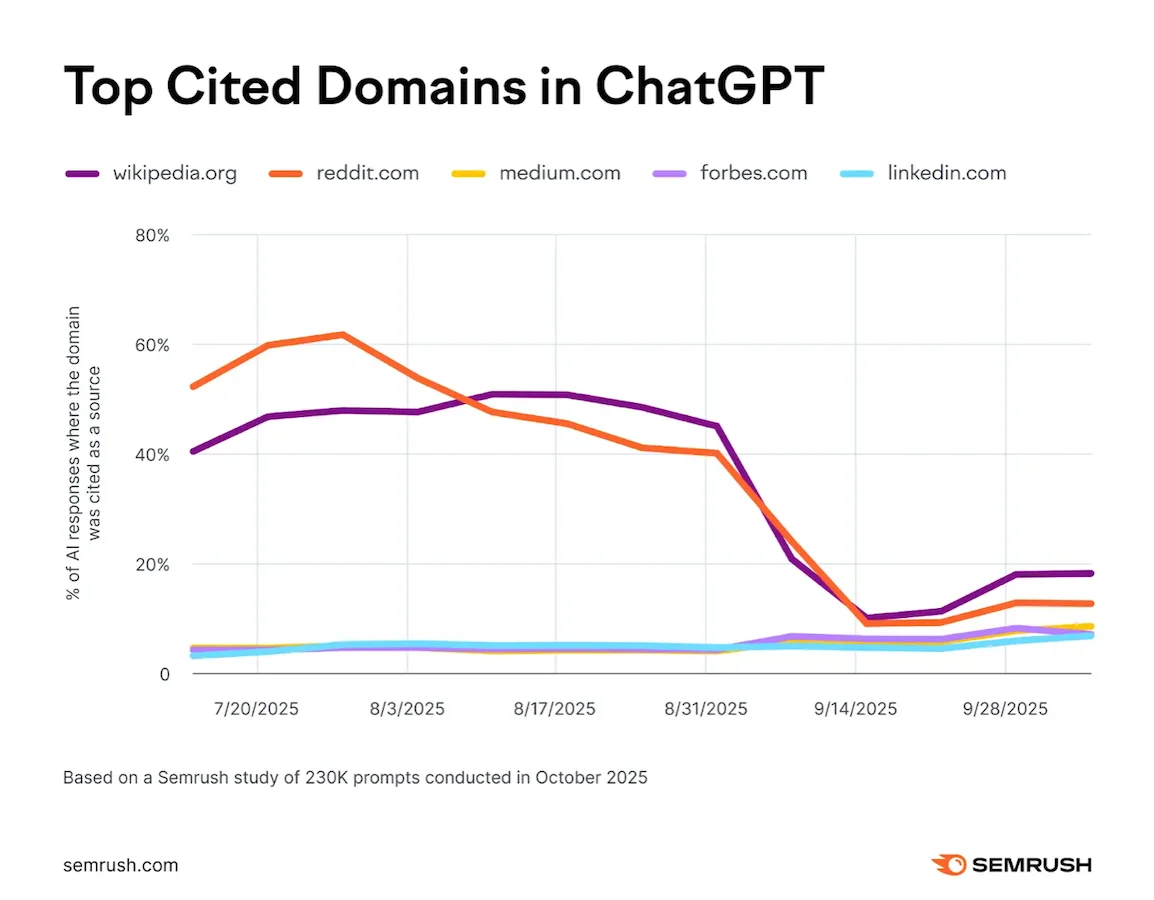
In a world of AI-generated material, users significantly look for authentic human voices. This advancement is reflected in search results: Platforms like Reddit and Quora are experiencing explosive development in natural traffic. Reddit has experienced a 603.41% boost because June 2023, while Quora has grown by 379.33%. No, your eyes aren't tricking you.