Steps to Integrate Web 2.0 for SEO
And after a preliminary dive in 2025, the percentage of people spending $45,000 or more monthly is holding strong: When looking at various markets, specifically, we saw that nearly one-third (30%) of B2B material marketers spend less than $5,000 each month, compared to 26% of B2C marketers. But otherwise, regardless of the fact that they're extremely different industries, there isn't a substantial difference in their budgets.
Around 1 in 6 (16%) material online marketers whose markets are both B2C and B2B invest $45,000 or more monthly, compared to only 10% of B2C and 10% of B2B online marketers. Despite algorithm modifications and a quickly altering material industry, material marketing is plainly still generating income. What's more, the information shows that the prevalent usage of AI hasn't caused shrinking content budgets.
We all understand that you can't put a keyword-stuffed blog site post on your site and wait for the clicks to roll in any longer. Today, you can't spend all your focus going after Google's algorithm, either.
Today, 21% of content marketers outsource someplace between three-quarters to 100% of their content budget plan, up from just 5% last year. Still, most typically, 26% of content online marketers just contract out about a quarter to half of their content spending plan, a percentage that hasn't changed dramatically given that 2023. Another 14% don't outsource any of their content spending plan at all, but that's in fact down from 29% in 2023: While groups with tight budget plans often contract out work to reasonably economical freelancers, some of this growth can be associated to individuals with larger budget plans who require more hands to assist them meet due dates.
How Data-Driven Content Is a Crucial Growth Factor
More than 1 in 4 (27%) outsource somewhere between three-quarters to 100% of their content budget, compared to just 20% of B2B online marketers and 16% of B2C online marketers. In theory, outsourcing material and analysis to AI could save cash and improve content online marketers' profit margins. While AI use is now practically universal in marketing, the majority of are still giving their work a human touch.
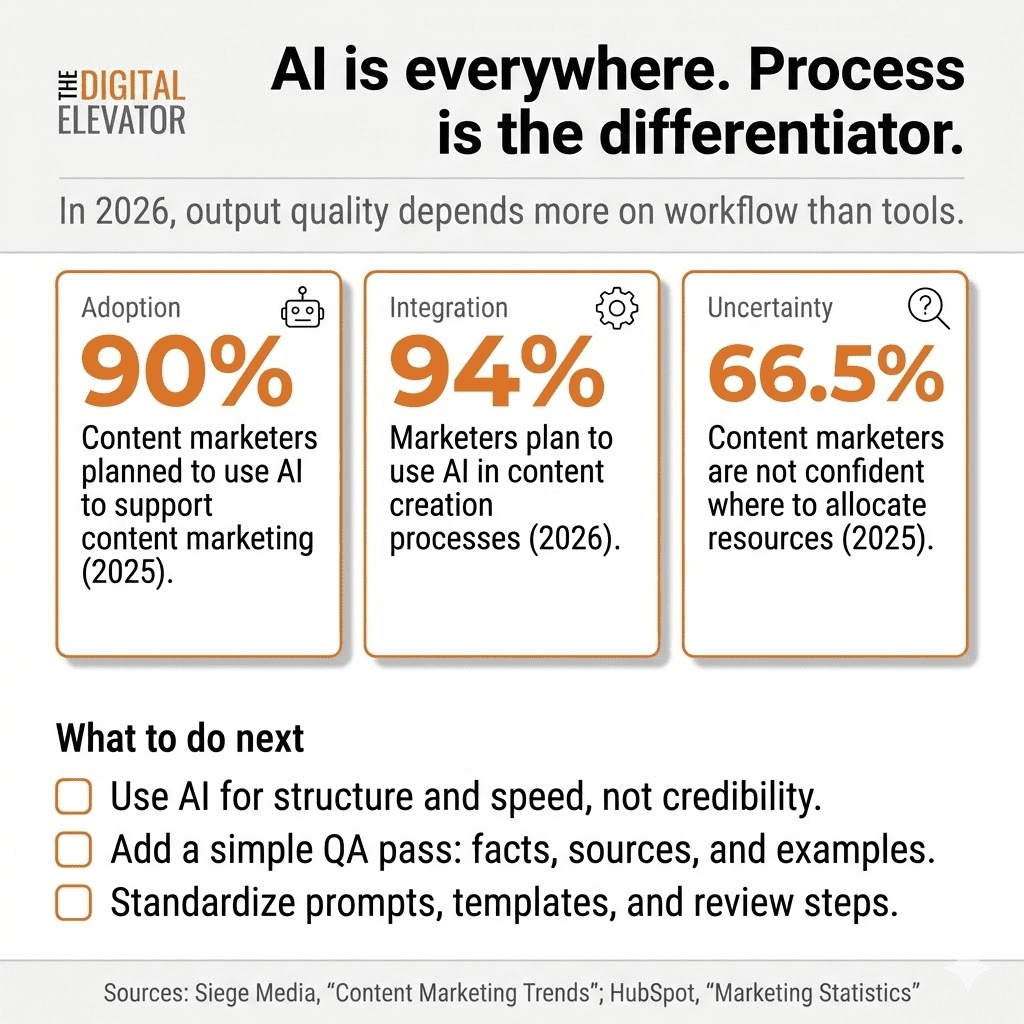
why Web 2.0 posts workToday, it's even easier to forget that the rise of AI is still really current. In 2023, just 65% of material online marketers stated they planned to use AI content generation tools, and 17% said they didn't plan to utilize them at all. Times have actually altered. The portion of material marketing programs that use AI increased from 83% in 2024 to 90% in 2025.

That doesn't indicate that content today goes directly from ChatGPT to a CMS without any oversight. Many frequently, 48% of material online marketers say their program utilizes a moderate amount of AI. Simply put, AI touches about 11% to 40% of their work: All in all, just 1% of content marketers state their work is 100% AI.
why Web 2.0 posts workHow to Leverage Web 2.0 to Boost Authority
Material constantly needs a human touch to make sure precision and to keep the number of em-dashes to a minimum. Don't be misinterpreted more than three-quarters (80%) of material marketers say ChatGPT is the most reputable and trustworthy tool for content marketing.
However, after a number of years as an undeniable market leader, ChatGPT now has some competition. It's no longer the only reliable AI on the market. The percentage of individuals who state Anthropic's Claude and Google's Gemini are the most credible LLMs has roughly doubled YoY (From 28% to 55% for Claude and from 16% to 44% for Gemini).
Some people have actually specifically soured on ChatGPT. Sometimes, that's since they're dissatisfied with the quality of its responses, as seen after the GPT-5 update. We likewise discovered that Gemini's appeal spiked last fall, around the very same time ChatGPT made headings due to links between the chatbot and AI psychosis, as well as growing personal privacy issues.
Proven Backlink Tips for Rapid Success
But as most tech business invest greatly in AI, others are capturing up. We've discovered that people typically use AI at the extremely starting and the very end of developing material, not during detailing or composing copy. This wasn't constantly the case. The portion of individuals using AI for conceptualizing and describing fell from 72% in 2025 to 61% in 2026, and the portion of individuals utilizing it to draft material fell from 57% to 44%.
And 74% use it for content ideation. Normally, content marketers are more flexible with utilizing AI for design and research.